Laundry symbols chart
Every care symbol in the five ISO 3758 families, plus the North American ones with no ISO twin — 50 in all. Tap any symbol for its meaning, maximum temperature, what to actually do and where the definition comes from — the less-used ones are explained right here under their family, the rest have a page of their own. Looking at a label right now? Find it by its shape.
Washing 17 symbols
The wash tub. A number is the hottest water allowed in °C; bars underneath ask for a gentler cycle; a hand means hand wash; a cross means do not wash.
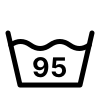 Wash at 95 °C95
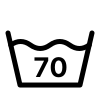 Wash at 70 °C70
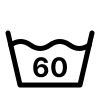 Wash at 60 °C60
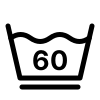 Wash at 60 °C, gentle cycle60 + 1 bar
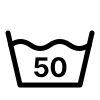 Wash at 50 °C50
 Wash at 50 °C, gentle cycle50 + 1 bar
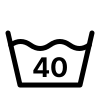 Wash at 40 °C40
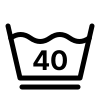 Wash at 40 °C, gentle cycle40 + 1 bar
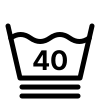 Wash at 40 °C, very gentle cycle40 + 2 bars
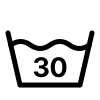 Wash at 30 °C30
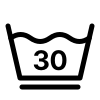 Wash at 30 °C, gentle cycle30 + 1 bar
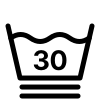 Wash at 30 °C, very gentle cycle30 + 2 bars
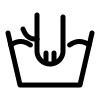 Hand washhand
 Hand wash in cool waterhand + 1 bar
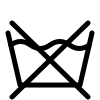 Do not washcross
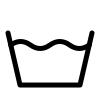 Machine wash, any temperatureempty tub · US
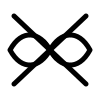 Do not wringcrossed twist · US
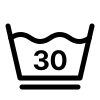
Wash at 30 °C, gentle cycle
Machine wash up to 30 °C on a gentle cycle with reduced agitation (one bar). For delicate synthetics and viscose blends.
What to do
Use the synthetics or easy-care programme at 30 °C, a lighter load, and a short or low spin.
- Maximum temperature
- 30 °C (86 °F) wash water
- Family
- Washing (tub)
- ISO 3758 name
- Washing, maximum 30 °C, mild process
- Distinguishing mark
- 30 + 1 bar
On US and Canadian labels

North American version: one dot with one bar (permanent-press setting).
Often confused with: Wash at 30 °C, very gentle cycle — Machine wash up to 30 °C on a very gentle cycle with much reduced agitation (two bars). Typical of machine-washable wool, silk blends and fine knits.
Sources
- GINETEX — Care symbols (existing care symbols under ISO 3758:2023) — checked 2026-09-22
- Government of Canada, Office of Consumer Affairs — Guide to Apparel and Textile Care Symbols (North American system) — checked 2026-09-22
Meanings are paraphrased from these sources, not quoted, and checked on the date shown.
On its own page: Wash at 30 °C, gentle cycle
Bleaching 3 symbols
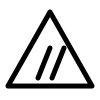
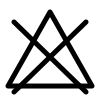
The triangle. Empty means any bleach, two slanted lines mean oxygen (non-chlorine) bleach only, a cross means no bleach at all.
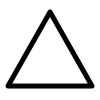
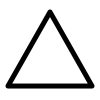
Any bleach allowed
Any bleach may be used when needed — chlorine (sodium hypochlorite) or oxygen-based.
What to do
You can use household chlorine bleach or an oxygen bleach when a load needs it; dose by the bleach product's own instructions.
- Maximum temperature
- None stated by this symbol
- Family
- Bleaching (triangle)
- ISO 3758 name
- Any bleaching agent allowed
- Distinguishing mark
- empty
Often confused with: Only non-chlorine (oxygen) bleach — Oxygen (non-chlorine) bleach is allowed, chlorine bleach is not. The two slanted lines inside the triangle are the whole difference from 'any bleach'.
Sources
- GINETEX — Care symbols (existing care symbols under ISO 3758:2023) — checked 2026-09-22
- Government of Canada, Office of Consumer Affairs — Guide to Apparel and Textile Care Symbols (North American system) — checked 2026-09-22
Meanings are paraphrased from these sources, not quoted, and checked on the date shown.
On its own page: Any bleach allowed
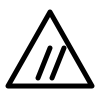
Only non-chlorine (oxygen) bleach
Oxygen (non-chlorine) bleach is allowed, chlorine bleach is not. The two slanted lines inside the triangle are the whole difference from 'any bleach'.
What to do
Use oxygen-based products — sodium percarbonate stain removers, 'colour-safe' bleach, or a detergent that already contains oxygen bleach — and keep household chlorine bleach away from this item.
- Maximum temperature
- None stated by this symbol
- Family
- Bleaching (triangle)
- ISO 3758 name
- Only oxygen / non-chlorine bleach allowed
- Distinguishing mark
- 2 slanted lines
Often confused with: Any bleach allowed — Any bleach may be used when needed — chlorine (sodium hypochlorite) or oxygen-based.
Sources
- GINETEX — Care symbols (existing care symbols under ISO 3758:2023) — checked 2026-09-22
- Government of Canada, Office of Consumer Affairs — Guide to Apparel and Textile Care Symbols (North American system) — checked 2026-09-22
Meanings are paraphrased from these sources, not quoted, and checked on the date shown.
On its own page: Only non-chlorine (oxygen) bleach
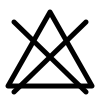
Do not bleach
No bleach of any kind — neither chlorine nor oxygen bleach.
What to do
Wash with a detergent that contains no bleach (check the pack — 'colour' and many liquid detergents are made without it) and skip bleaching stain removers.
- Maximum temperature
- None stated by this symbol
- Family
- Bleaching (triangle)
- ISO 3758 name
- Do not bleach
- Distinguishing mark
- cross
Often confused with: Only non-chlorine (oxygen) bleach — Oxygen (non-chlorine) bleach is allowed, chlorine bleach is not. The two slanted lines inside the triangle are the whole difference from 'any bleach'.
Sources
- GINETEX — Care symbols (existing care symbols under ISO 3758:2023) — checked 2026-09-22
- Government of Canada, Office of Consumer Affairs — Guide to Apparel and Textile Care Symbols (North American system) — checked 2026-09-22
Meanings are paraphrased from these sources, not quoted, and checked on the date shown.
Drying 15 symbols
The square. A circle inside means tumble dryer, with dots for heat; lines inside mean natural drying — hanging (vertical) or flat (horizontal).
 Tumble dry, normal heatcircle + 2 dots · max 80 °C
 Tumble dry, low heatcircle + 1 dot · max 60 °C
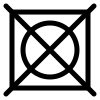 Do not tumble drycircle + cross
 Tumble dry, high heatcircle + 3 dots · US · max 75 °C
 Tumble dry, any heatempty circle · US
 Tumble dry, no heat (air only)filled circle · US
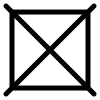 Do not drycrossed square · US
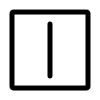 Line dry1 vertical line
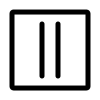 Drip dry (hang wet)2 vertical lines
 Dry flat1 horizontal line
 Drip dry flat2 horizontal lines
 Line dry in the shade1 vertical line + corner
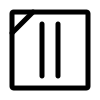 Drip dry in the shade2 vertical lines + corner
 Dry flat in the shade1 horizontal line + corner
 Drip dry flat in the shade2 horizontal lines + corner

Tumble dry, low heat
Tumble drying is allowed, but only on a mild, reduced-heat setting. GINETEX gives 60 °C for this setting.
What to do
Pick the low-heat or 'delicate' dryer setting, and consider a shorter time — or finish drying on a hanger.
- Maximum temperature
- 60 °C (140 °F) dryer air
- Family
- Drying (square)
- ISO 3758 name
- Tumble drying possible, lower temperature
- Distinguishing mark
- circle + 1 dot
On US and Canadian labels
North American one dot is also low heat, but with a lower ceiling: not exceeding 55 °C (131 °F).
Often confused with: Tumble dry, normal heat — Tumble drying is fine at the normal heat setting, with a normal load. GINETEX gives 80 °C as the normal drying temperature.
Sources
- GINETEX — Care symbols (existing care symbols under ISO 3758:2023) — checked 2026-09-22
- Government of Canada, Office of Consumer Affairs — Guide to Apparel and Textile Care Symbols (North American system) — checked 2026-09-22
Meanings are paraphrased from these sources, not quoted, and checked on the date shown.
On its own page: Tumble dry, low heat
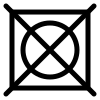
Do not tumble dry
Do not put the item in a tumble dryer at any setting.
What to do
Air dry instead. If the label also has a natural-drying square (lines inside), follow it — flat for knits, on a line or hanger otherwise.
- Maximum temperature
- None stated by this symbol
- Family
- Drying (square)
- ISO 3758 name
- Do not tumble dry
- Distinguishing mark
- circle + cross
On US and Canadian labels
Same drawing and meaning in North America.
Often confused with: Do not dry clean — No professional dry cleaning. By extension, do not use solvent-based stain removers on it.
Sources
- GINETEX — Care symbols (existing care symbols under ISO 3758:2023) — checked 2026-09-22
- Government of Canada, Office of Consumer Affairs — Guide to Apparel and Textile Care Symbols (North American system) — checked 2026-09-22
Meanings are paraphrased from these sources, not quoted, and checked on the date shown.
On its own page: Do not tumble dry
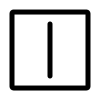
Line dry
Hang the item up to dry — on a washing line, airer or hanger — after spinning or squeezing out the excess water.
What to do
Spin as normal, then hang it; shaking it out and smoothing seams first saves ironing.
- Maximum temperature
- None stated by this symbol
- Family
- Drying (square)
- ISO 3758 name
- Line drying
- Distinguishing mark
- 1 vertical line
On US and Canadian labels

North American labels usually draw line drying as a square with a sagging curve across the top, not a vertical line.
Often confused with: Dry flat — Lay the item flat to dry after removing the excess water, so it keeps its shape. Typical of heavy knits and wool jumpers.
Sources
- GINETEX — Care symbols (existing care symbols under ISO 3758:2023) — checked 2026-09-22
- Government of Canada, Office of Consumer Affairs — Guide to Apparel and Textile Care Symbols (North American system) — checked 2026-09-22
Meanings are paraphrased from these sources, not quoted, and checked on the date shown.

Dry flat
Lay the item flat to dry after removing the excess water, so it keeps its shape. Typical of heavy knits and wool jumpers.
What to do
Press or spin out the water, pull the item into shape on a towel or a flat drying rack, and turn it once while it dries.
- Maximum temperature
- None stated by this symbol
- Family
- Drying (square)
- ISO 3758 name
- Flat drying
- Distinguishing mark
- 1 horizontal line
On US and Canadian labels
Same idea in North America: one horizontal line in the square.
Often confused with: Line dry — Hang the item up to dry — on a washing line, airer or hanger — after spinning or squeezing out the excess water.
Sources
- GINETEX — Care symbols (existing care symbols under ISO 3758:2023) — checked 2026-09-22
- Government of Canada, Office of Consumer Affairs — Guide to Apparel and Textile Care Symbols (North American system) — checked 2026-09-22
Meanings are paraphrased from these sources, not quoted, and checked on the date shown.

Drip dry flat
Lay the item flat while it is still dripping wet — without spinning or wringing it first.
What to do
Skip the spin, lay the item on a rack where water can drain (over a bath or tray), and shape it by hand.
- Maximum temperature
- None stated by this symbol
- Family
- Drying (square)
- ISO 3758 name
- Drip flat drying
- Distinguishing mark
- 2 horizontal lines
Often confused with: Dry flat — Lay the item flat to dry after removing the excess water, so it keeps its shape. Typical of heavy knits and wool jumpers.
Sources
- GINETEX — Care symbols (existing care symbols under ISO 3758:2023) — checked 2026-09-22
- clevercare.info (GINETEX consumer site) — Care symbols index — checked 2026-09-22
Meanings are paraphrased from these sources, not quoted, and checked on the date shown.
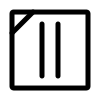
Drip dry in the shade
Hang the item up soaking wet, without spinning or wringing, and away from direct sun.
What to do
Skip the spin, hang it on a hanger indoors or in shade over somewhere it can drip.
- Maximum temperature
- None stated by this symbol
- Family
- Drying (square)
- ISO 3758 name
- Drip line drying in the shade
- Distinguishing mark
- 2 vertical lines + corner
On US and Canadian labels

North American labels mark shade with two slanted lines in the corner and draw drip drying as three vertical lines.
Often confused with: Drip dry (hang wet) — Hang the item up while it is still soaking wet — no spinning, no wringing — and let the water drip out. The weight of the water pulls out wrinkles.
Sources
- GINETEX — Care symbols (existing care symbols under ISO 3758:2023) — checked 2026-09-22
- Government of Canada, Office of Consumer Affairs — Guide to Apparel and Textile Care Symbols (North American system) — checked 2026-09-22
Meanings are paraphrased from these sources, not quoted, and checked on the date shown.

Dry flat in the shade
Lay flat to dry, out of direct sunlight, after removing excess water. Common on wool and delicate knits.
What to do
Press out the water, shape the item on a towel or rack indoors or in the shade, and keep it away from strong sun and direct heat.
- Maximum temperature
- None stated by this symbol
- Family
- Drying (square)
- ISO 3758 name
- Flat drying in the shade
- Distinguishing mark
- 1 horizontal line + corner
On US and Canadian labels

North American labels mark shade with two slanted lines in the corner instead of one.
Often confused with: Dry flat — Lay the item flat to dry after removing the excess water, so it keeps its shape. Typical of heavy knits and wool jumpers.
Sources
- GINETEX — Care symbols (existing care symbols under ISO 3758:2023) — checked 2026-09-22
- Government of Canada, Office of Consumer Affairs — Guide to Apparel and Textile Care Symbols (North American system) — checked 2026-09-22
Meanings are paraphrased from these sources, not quoted, and checked on the date shown.

Drip dry flat in the shade
Lay the item flat while still dripping wet, without spinning, and out of direct sunlight.
What to do
Skip the spin, lay it on a draining rack indoors or in shade, and shape it by hand.
- Maximum temperature
- None stated by this symbol
- Family
- Drying (square)
- ISO 3758 name
- Drip flat drying in the shade
- Distinguishing mark
- 2 horizontal lines + corner
Often confused with: Drip dry flat — Lay the item flat while it is still dripping wet — without spinning or wringing it first.
Sources
- GINETEX — Care symbols (existing care symbols under ISO 3758:2023) — checked 2026-09-22
- clevercare.info (GINETEX consumer site) — Care symbols index — checked 2026-09-22
Meanings are paraphrased from these sources, not quoted, and checked on the date shown.
Ironing 6 symbols
The iron. One, two or three dots set the maximum soleplate temperature; a cross means do not iron.
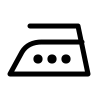 Iron at high temperature3 dots · max 210 °C
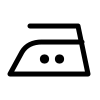 Iron at medium temperature2 dots · max 160 °C
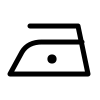 Iron at low temperature1 dot · max 120 °C
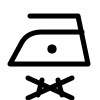 Iron at low temperature, no steam1 dot + crossed steam · max 120 °C
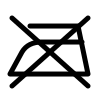 Do not ironcross
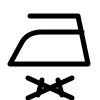 Do not steamcrossed steam · US
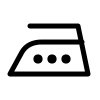
Iron at high temperature
Iron at up to a hot setting: GINETEX gives a maximum soleplate temperature of 210 °C for the current ISO 3758 edition. This is the cotton/linen setting; steam is allowed.
What to do
Use the iron's cotton/linen (•••) setting, ideally while the item is slightly damp. Iron shiny or printed areas inside out or under a cloth.
- Maximum temperature
- 210 °C (410 °F) iron soleplate
- Family
- Ironing (iron)
- ISO 3758 name
- Ironing, maximum soleplate 210 °C
- Distinguishing mark
- 3 dots
On US and Canadian labels
The North American guide puts the three-dot ceiling at 200 °C (392 °F), 10 °C lower than the current ISO figure.
Often confused with: Iron at medium temperature — Iron at a moderate setting, with a soleplate no hotter than 160 °C (GINETEX, current ISO 3758). It matches the wool / silk / polyester / viscose setting.
Sources
- GINETEX — Care symbols (existing care symbols under ISO 3758:2023) — checked 2026-09-22
- Government of Canada, Office of Consumer Affairs — Guide to Apparel and Textile Care Symbols (North American system) — checked 2026-09-22
Meanings are paraphrased from these sources, not quoted, and checked on the date shown.
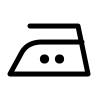
Iron at medium temperature
Iron at a moderate setting, with a soleplate no hotter than 160 °C (GINETEX, current ISO 3758). It matches the wool / silk / polyester / viscose setting.
What to do
Set the iron to •• (wool/silk). For wool, iron through a slightly damp cloth and do not press hard; steam is fine.
- Maximum temperature
- 160 °C (320 °F) iron soleplate
- Family
- Ironing (iron)
- ISO 3758 name
- Ironing, maximum soleplate 160 °C
- Distinguishing mark
- 2 dots
On US and Canadian labels
The North American guide sets two dots at a lower ceiling: 150 °C (302 °F).
Often confused with: Iron at low temperature — Iron only at a low setting, soleplate no hotter than 120 °C (GINETEX, current ISO 3758) — the acrylic / nylon / acetate setting. GINETEX advises caution with steam at this level.
Sources
- GINETEX — Care symbols (existing care symbols under ISO 3758:2023) — checked 2026-09-22
- Government of Canada, Office of Consumer Affairs — Guide to Apparel and Textile Care Symbols (North American system) — checked 2026-09-22
Meanings are paraphrased from these sources, not quoted, and checked on the date shown.
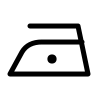
Iron at low temperature
Iron only at a low setting, soleplate no hotter than 120 °C (GINETEX, current ISO 3758) — the acrylic / nylon / acetate setting. GINETEX advises caution with steam at this level.
What to do
Set the iron to • (synthetics), preferably without steam, and use a pressing cloth or iron inside out on shiny fabric.
- Maximum temperature
- 120 °C (248 °F) iron soleplate
- Family
- Ironing (iron)
- ISO 3758 name
- Ironing, maximum soleplate 120 °C
- Distinguishing mark
- 1 dot
On US and Canadian labels
The North American guide sets one dot at 110 °C (230 °F).
Often confused with: Iron at low temperature, no steam — Iron at a low setting (soleplate up to 120 °C) with the steam switched off. The crossed-out steam jets under the iron are what separate it from the plain one-dot symbol.
Sources
- GINETEX — Care symbols (existing care symbols under ISO 3758:2023) — checked 2026-09-22
- clevercare.info (GINETEX consumer site) — Care symbols index — checked 2026-09-22
- Government of Canada, Office of Consumer Affairs — Guide to Apparel and Textile Care Symbols (North American system) — checked 2026-09-22
Meanings are paraphrased from these sources, not quoted, and checked on the date shown.
On its own page: Iron at low temperature
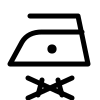
Iron at low temperature, no steam
Iron at a low setting (soleplate up to 120 °C) with the steam switched off. The crossed-out steam jets under the iron are what separate it from the plain one-dot symbol.
What to do
Empty or switch off the steam, set the iron to •, and use a dry pressing cloth if the fabric is shiny.
- Maximum temperature
- 120 °C (248 °F) iron soleplate
- Family
- Ironing (iron)
- ISO 3758 name
- Ironing, maximum soleplate 120 °C, without steam
- Distinguishing mark
- 1 dot + crossed steam
On US and Canadian labels
North America has a separate 'do not steam' symbol — the iron with crossed steam jets and no dots.
Often confused with: Iron at low temperature — Iron only at a low setting, soleplate no hotter than 120 °C (GINETEX, current ISO 3758) — the acrylic / nylon / acetate setting. GINETEX advises caution with steam at this level.
Sources
- GINETEX — Care symbols (existing care symbols under ISO 3758:2023) — checked 2026-09-22
- clevercare.info (GINETEX consumer site) — Care symbols index — checked 2026-09-22
Meanings are paraphrased from these sources, not quoted, and checked on the date shown.
On its own page: Iron at low temperature, no steam
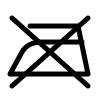
Do not iron
Do not iron the item at all; heat from an iron would change it permanently (melt, shine, shrink or flatten it).
What to do
Smooth it by hand while damp and hang it to dry. If it creases badly, a professional cleaner can finish it as their own process allows.
- Maximum temperature
- None stated by this symbol
- Family
- Ironing (iron)
- ISO 3758 name
- Do not iron
- Distinguishing mark
- cross
On US and Canadian labels
Same drawing in North America, where it covers pressing as well.
Often confused with: Do not steam — North American symbol: do not use steam on the item — no steam iron setting and no garment steamer.
Sources
- GINETEX — Care symbols (existing care symbols under ISO 3758:2023) — checked 2026-09-22
- Government of Canada, Office of Consumer Affairs — Guide to Apparel and Textile Care Symbols (North American system) — checked 2026-09-22
Meanings are paraphrased from these sources, not quoted, and checked on the date shown.
On its own page: Do not iron
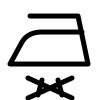
Do not steam
North American symbol: do not use steam on the item — no steam iron setting and no garment steamer.
North American symbol
What to do
If ironing is allowed at all, use a dry iron; otherwise smooth by hand and hang.
- Maximum temperature
- None stated by this symbol
- Family
- Ironing (iron)
- ISO 3758 name
- None — this is a North American (ASTM D5489) symbol with no ISO 3758 equivalent
- Distinguishing mark
- crossed steam · US
Where this symbol comes from
No standalone ISO 3758 equivalent. The current ISO edition only combines 'no steam' with one-dot ironing.
Often confused with: Iron at low temperature, no steam — Iron at a low setting (soleplate up to 120 °C) with the steam switched off. The crossed-out steam jets under the iron are what separate it from the plain one-dot symbol.
Sources
- Government of Canada, Office of Consumer Affairs — Guide to Apparel and Textile Care Symbols (North American system) — checked 2026-09-22
- clevercare.info (GINETEX consumer site) — Care symbols index — checked 2026-09-22
Meanings are paraphrased from these sources, not quoted, and checked on the date shown.
Professional care 9 symbols
The circle is for the dry cleaner, not for you. P and F name the solvents allowed, W means professional wet cleaning, bars ask for a gentler process.
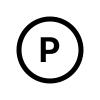 Dry clean (P)P
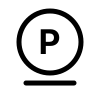 Dry clean (P), gentle processP + 1 bar
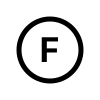 Dry clean (F), hydrocarbon onlyF
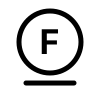 Dry clean (F), gentle processF + 1 bar
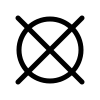 Do not dry cleancross
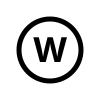 Professional wet clean (W)W
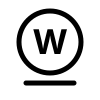 Professional wet clean (W), gentleW + 1 bar
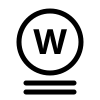 Professional wet clean (W), very gentleW + 2 bars
 Do not wet cleanW + cross
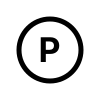
Dry clean (P)
The item can be professionally dry cleaned in perchloroethylene or hydrocarbon solvents on a normal process. It is an instruction for the cleaner, not a home-care step.
What to do
Take it to a dry cleaner; the letter tells them which solvents are safe. Solvent-based spot removers may be used with care — test on a hidden area first.
- Maximum temperature
- None stated by this symbol
- Family
- Professional care (circle)
- ISO 3758 name
- Professional dry cleaning in perchloroethylene and hydrocarbons, normal process
- Distinguishing mark
- P
On US and Canadian labels
The North American guide describes P as any solvent except trichloroethylene, normal cycle.
Often confused with: Dry clean (F), hydrocarbon only — Professional dry cleaning in hydrocarbon solvents only, normal process — perchloroethylene is not allowed.
Sources
- GINETEX — Care symbols (existing care symbols under ISO 3758:2023) — checked 2026-09-22
- Government of Canada, Office of Consumer Affairs — Guide to Apparel and Textile Care Symbols (North American system) — checked 2026-09-22
Meanings are paraphrased from these sources, not quoted, and checked on the date shown.
On its own page: Dry clean (P)
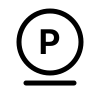
Dry clean (P), gentle process
Professional dry cleaning in the same solvents as P, but on a mild process: the bar asks the cleaner to limit added moisture, mechanical action and/or drying temperature.
What to do
Take it to a dry cleaner and point out the bar under the P; do not treat it at home with solvents.
- Maximum temperature
- None stated by this symbol
- Family
- Professional care (circle)
- ISO 3758 name
- Professional dry cleaning in perchloroethylene and hydrocarbons, mild process
- Distinguishing mark
- P + 1 bar
Often confused with: Dry clean (P) — The item can be professionally dry cleaned in perchloroethylene or hydrocarbon solvents on a normal process. It is an instruction for the cleaner, not a home-care step.
Sources
- GINETEX — Care symbols (existing care symbols under ISO 3758:2023) — checked 2026-09-22
- clevercare.info (GINETEX consumer site) — Care symbols index — checked 2026-09-22
Meanings are paraphrased from these sources, not quoted, and checked on the date shown.
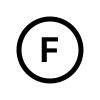
Dry clean (F), hydrocarbon only
Professional dry cleaning in hydrocarbon solvents only, normal process — perchloroethylene is not allowed.
What to do
Use a dry cleaner who can clean in hydrocarbon solvent, and do not use solvent-based stain removers yourself.
- Maximum temperature
- None stated by this symbol
- Family
- Professional care (circle)
- ISO 3758 name
- Professional dry cleaning in hydrocarbons, normal process
- Distinguishing mark
- F
On US and Canadian labels
The North American guide describes F as petroleum solvent only.
Often confused with: Dry clean (P) — The item can be professionally dry cleaned in perchloroethylene or hydrocarbon solvents on a normal process. It is an instruction for the cleaner, not a home-care step.
Sources
- GINETEX — Care symbols (existing care symbols under ISO 3758:2023) — checked 2026-09-22
- Government of Canada, Office of Consumer Affairs — Guide to Apparel and Textile Care Symbols (North American system) — checked 2026-09-22
Meanings are paraphrased from these sources, not quoted, and checked on the date shown.
On its own page: Dry clean (F), hydrocarbon only
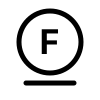
Dry clean (F), gentle process
Professional dry cleaning in hydrocarbon solvents only, on a mild process with limited moisture, agitation and/or drying temperature.
What to do
Take it to a dry cleaner who uses hydrocarbon solvent and mention the bar; no solvent stain removers at home.
- Maximum temperature
- None stated by this symbol
- Family
- Professional care (circle)
- ISO 3758 name
- Professional dry cleaning in hydrocarbons, mild process
- Distinguishing mark
- F + 1 bar
Often confused with: Dry clean (F), hydrocarbon only — Professional dry cleaning in hydrocarbon solvents only, normal process — perchloroethylene is not allowed.
Sources
- GINETEX — Care symbols (existing care symbols under ISO 3758:2023) — checked 2026-09-22
- clevercare.info (GINETEX consumer site) — Care symbols index — checked 2026-09-22
Meanings are paraphrased from these sources, not quoted, and checked on the date shown.
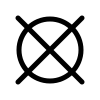
Do not dry clean
No professional dry cleaning. By extension, do not use solvent-based stain removers on it.
What to do
Clean it as the washing symbol says; if that is also crossed out, ask the maker or a professional cleaner about wet cleaning (W).
- Maximum temperature
- None stated by this symbol
- Family
- Professional care (circle)
- ISO 3758 name
- Do not dry clean
- Distinguishing mark
- cross
On US and Canadian labels
Same drawing and meaning in North America.
Often confused with: Do not tumble dry — Do not put the item in a tumble dryer at any setting.
Sources
- GINETEX — Care symbols (existing care symbols under ISO 3758:2023) — checked 2026-09-22
- Government of Canada, Office of Consumer Affairs — Guide to Apparel and Textile Care Symbols (North American system) — checked 2026-09-22
Meanings are paraphrased from these sources, not quoted, and checked on the date shown.
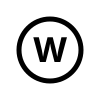
Professional wet clean (W)
The item can be cleaned in water by a professional wet-cleaning process, normal level. Wet cleaning uses equipment, additives and finishing that a home washing machine does not have — the W does not mean 'washable'.
What to do
Ask a cleaner who offers wet cleaning. Whether you can wash it at home is decided by the tub symbol, not by the W.
- Maximum temperature
- None stated by this symbol
- Family
- Professional care (circle)
- ISO 3758 name
- Professional wet cleaning, normal process
- Distinguishing mark
- W
On US and Canadian labels
The North American guide lists wet-clean as a supplementary symbol.
Often confused with: Dry clean (P) — The item can be professionally dry cleaned in perchloroethylene or hydrocarbon solvents on a normal process. It is an instruction for the cleaner, not a home-care step.
Sources
- GINETEX — Care symbols (existing care symbols under ISO 3758:2023) — checked 2026-09-22
- Government of Canada, Office of Consumer Affairs — Guide to Apparel and Textile Care Symbols (North American system) — checked 2026-09-22
Meanings are paraphrased from these sources, not quoted, and checked on the date shown.
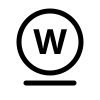
Professional wet clean (W), gentle
Professional wet cleaning on a mild process with reduced mechanical action, for sensitive textiles.
What to do
Leave it to a professional wet cleaner and point out the bar.
- Maximum temperature
- None stated by this symbol
- Family
- Professional care (circle)
- ISO 3758 name
- Professional wet cleaning, mild process
- Distinguishing mark
- W + 1 bar
Often confused with: Professional wet clean (W), very gentle — Professional wet cleaning on a very mild process with much reduced mechanical action, for very sensitive textiles.
Sources
- GINETEX — Care symbols (existing care symbols under ISO 3758:2023) — checked 2026-09-22
- clevercare.info (GINETEX consumer site) — Care symbols index — checked 2026-09-22
Meanings are paraphrased from these sources, not quoted, and checked on the date shown.
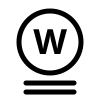
Professional wet clean (W), very gentle
Professional wet cleaning on a very mild process with much reduced mechanical action, for very sensitive textiles.
What to do
Leave it to a professional wet cleaner and point out the two bars.
- Maximum temperature
- None stated by this symbol
- Family
- Professional care (circle)
- ISO 3758 name
- Professional wet cleaning, very mild process
- Distinguishing mark
- W + 2 bars
Often confused with: Professional wet clean (W), gentle — Professional wet cleaning on a mild process with reduced mechanical action, for sensitive textiles.
Sources
- GINETEX — Care symbols (existing care symbols under ISO 3758:2023) — checked 2026-09-22
- clevercare.info (GINETEX consumer site) — Care symbols index — checked 2026-09-22
Meanings are paraphrased from these sources, not quoted, and checked on the date shown.

Do not wet clean
No professional wet cleaning. It says nothing about home washing — that is the tub symbol's job.
What to do
If the item needs a professional clean, use dry cleaning as the P or F symbol allows.
- Maximum temperature
- None stated by this symbol
- Family
- Professional care (circle)
- ISO 3758 name
- Do not wet clean
- Distinguishing mark
- W + cross
On US and Canadian labels
The North American guide lists do-not-wet-clean as a supplementary symbol.
Often confused with: Do not dry clean — No professional dry cleaning. By extension, do not use solvent-based stain removers on it.
Sources
- GINETEX — Care symbols (existing care symbols under ISO 3758:2023) — checked 2026-09-22
- Government of Canada, Office of Consumer Affairs — Guide to Apparel and Textile Care Symbols (North American system) — checked 2026-09-22
Meanings are paraphrased from these sources, not quoted, and checked on the date shown.
On its own page: Do not wet clean
How to read a care label in 20 seconds
- Five shapes, normally in this order: tub (washing), triangle (bleaching), square (drying), iron (ironing), circle (professional cleaning).
- A cross through any shape means “don't”.
- Bars under a tub or circle ask for a gentler process: one bar gentle, two bars very gentle.
- Dots mean heat: on the iron and the dryer everywhere, and in the wash tub on US labels (where the number would be on a European one).
- The number is a ceiling, not a target — a cooler, gentler treatment is always allowed.
ISO numbers vs North American dots
US and Canadian labels (ASTM D5489 system) draw the wash temperature as dots. The same dots in the dryer and on the iron do not map to the same temperatures in both systems:
| ISO number | Fahrenheit | US dots |
|---|---|---|
| 95 °C | 203 °F | 6 dots |
| 70 °C | 158 °F | 5 dots |
| 60 °C | 140 °F | 4 dots |
| 50 °C | 122 °F | 3 dots |
| 40 °C | 104 °F | 2 dots |
| 30 °C | 86 °F | 1 dot |
| Dots | ISO 3758 (GINETEX) | North America |
|---|---|---|
| 1 | 60 °C, low | 55 °C, low |
| 2 | 80 °C, normal | 65 °C, medium |
| 3 | not used | 75 °C, high |
| Dots | ISO 3758:2023 (GINETEX) | North America |
|---|---|---|
| 1 | 120 °C | 110 °C |
| 2 | 160 °C | 150 °C |
| 3 | 210 °C | 200 °C |
North American figures from the Government of Canada's guide to the harmonised care symbols; ISO figures as published by GINETEX. Sources are linked with each symbol.