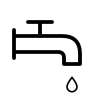
Tap (water supply fault)
The machine is not getting enough water: the tap is turned off, the inlet hose is kinked or blocked, the small filter in the inlet hose is clogged, or the water pressure is too low.
What it is for
It is a warning, not a button. Work through the causes the makers list, cheapest first: open the tap (stopcock) behind the machine fully; pull the machine out a little and check the inlet hose is not kinked or squashed against the wall; then turn the tap off, unscrew the hose from the tap and clean the small plastic filter in the hose’s end — Miele’s manual names a blocked intake filter as the other cause and suggests checking that filter every six months or so. Bosch adds that the water pressure itself may be too low. On a Beko, press Start/Pause/Cancel briefly once the water is back and the programme carries on.
Makes differ, check your machine’s manual: the same drawing can mean different things on different brands, and only your model’s manual says exactly what a programme does, how hot and how long.
- What it looks like
- A water tap seen from the side: a pipe from the wall, a handle on top and a spout turning down. Bosch and Miele draw the tap on its own; Beko draws it with a diagonal line through it.
- Names makers use
- Tap (Bosch); Water intake fault (Miele); Water cut-off symbol (Beko)
Where makes differ
Bosch shows the tap on the display and gives one cause: the pressure is too low or the hose is blocked or kinked. Miele shows it after a programme has been interrupted, next to the words “Water intake fault. Open the stopcock.” Beko’s WI 1382 crosses the tap out, calls it the water cut-off symbol, and lights it together with a flashing rinse indicator — and says only some models have it. Miele flags a blocked hot-water intake differently: an “i” with “Check hot water intake”, because the programme still ran on cold water.
Often confused with

The water container of a condenser or heat-pump dryer is full and needs emptying.
What this page cannot tell you
It cannot tell which part is at fault on your machine — tap, hose, filter or the inlet valve inside — or whether your model has a tap symbol at all: Beko says the symbol depends on the model, and many machines report the same problem with an error code instead (see washing-machine error codes by brand). The three documents behind this page are Bosch’s UK guide, one Miele manual and one Beko manual; other models of the same makes may draw it differently.
Sources
No single published standard defines washing-machine or dryer programme icons, so this meaning is taken from 3 makers’ own guides and manuals, each fetched and read on the date shown:
- Bosch: Bosch Home UK — Washing machine symbols guide — Tap symbol (a tap seen from the side): “The water pressure is too low or the supply hose is blocked or kinked.” Checked 2026-10-16.
- Miele: Miele — Operating instructions for washing machines, WWV 980 WPS Passion (PDF) — Problem solving guide, page 75, “Fault message after a programme has been interrupted”: a tap beside “Water intake fault. Open the stopcock.” Cause: “The water intake is blocked or restricted.” Remedies: “Check whether the stopcock has been properly opened.”, “Check whether the intake hose is kinked.”, “Check whether there is sufficient water pressure.”; or “The filter in the water intake is blocked.” — “Clean the filter.” Page 73: “The accessible filter in the union at the open end of the inlet hose should be checked every six months or so”, after turning off the stopcock and unscrewing the hose from it. Checked 2026-10-16.
- Beko: Beko UK — WI 1382 washing machine user’s manual (PDF) — Display symbols, page 19: c, “Water cut-off symbol (According to your machine’s model)”, drawn as a tap with a line through it. Troubleshooting, page 36: “The Rinse Symbol amongst the Program Indicator Symbols is flashing. (Subject to the model of your machine, water cut-off symbol may light up too)” — “Water may have been cut off.” Restart with Start/Pause/Cancel “after ensuring that the water is not cut off.” Checked 2026-10-16.
Written in our own words; quotations are the makers’ wording.